Winterproof Your Yard: How to Prepare Your Landscaping After a Mild Season
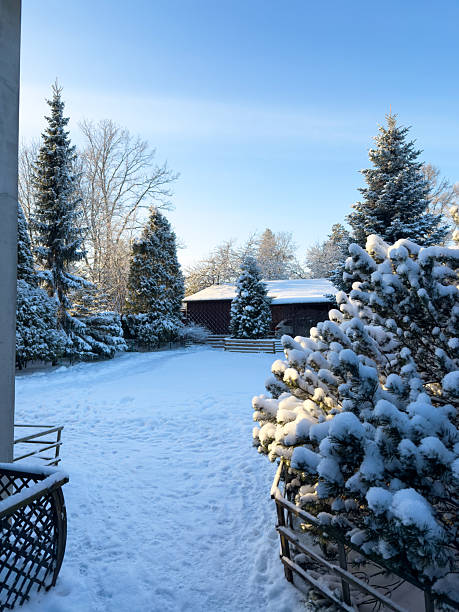
Winterproof Your Yard: How to Prepare Your Landscaping After a Mild Season
After a mild winter with little snow, it’s easy to let yard care slide. But when forecast patterns hint at a rebound—bringing heavy, wet snowfall, sharp freeze-thaw cycles, and lingering sub-zero temperatures—your trees, lawn, and perennial beds are the first to take the hit.
Heavy snow accumulation, hungry winter wildlife, and salt run-off can decimate an unprepared yard. Taking steps right now to shield your green space ensures your garden survives the winter freeze and bounces back vibrant and healthy come spring.
1. Protect Young Trees and Delicate Shrubs
Heavy, wet snow packs a punch. It clings to branches, bending and snapping prized ornamentals, while hungry rodents look to bark as a winter food source.
-
Wrap fragile evergreens: Boxwoods, arborvitae, and young conifers are vulnerable to heavy snow loads and winter desiccation (drying out from cold winds). Wrap them in breathable burlap tied with twine to prevent branches from splaying open under snow weight.
-
Install trunk guards: Rabbits and mice will gnaw on tree bark when food becomes scarce. Place plastic spiral tree guards around the bases of young, smooth-barked trees to protect their trunk bark up to the snow line.
-
Prune dead or weak limbs: Cut back dead, diseased, or hazardous branches now. Wet, heavy snow on weak limbs can cause clean snaps that damage nearby property or tear the trunk.
2. Prepare the Lawn for Heavy Accumulation
Snow acts as an insulating blanket, but when left on a lawn for months, it can trap moisture and cause mold issues if the turf isn't prepped properly.
-
Lower the mower height: On your last cut of the season, drop the mower blade down to about 2 to 2.5 inches. Shorter grass prevents matted blades under heavy snow cover, drastically reducing the risk of snow mold in early spring.
-
Aerate and overseed early: Core aeration opens up compacted soil, allowing oxygen, water, and late-season nutrients to reach the root zone before the ground freezes solid.
-
Apply a late-fall winterizer fertilizer: A high-potassium winterizer feed strengthens grass roots over the dormant season, helping the lawn store essential nutrients to survive freezing soils.
3. Protect Perennial Beds and Garden Soil
Exposed soil loses moisture rapidly during freezing winds, and intense frost-heaving can lift plant roots right out of the ground.
| Area | Recommended Winter Care Action |
| Flower Beds | Apply a 2- to 4-inch layer of organic mulch (shredded bark or clean leaves) over perennial roots to insulate against freeze-thaw cycles. |
| Raised Beds | Clear out dead annual vegetable vines to prevent overwintering pests; cover bare soil with burlap or a layer of mulch to prevent erosion. |
| Potted Plants | Move terracotta, ceramic, or clay planters indoors or into an unheated garage. Freezing moisture expands inside porous pots and cracks them open. |
4. Shield Landscaping from Salt and Deicing Damage
Rock salt (sodium chloride) pulls moisture directly away from plant roots, leaving burn marks on nearby grass and evergreen foliage by springtime.
-
Set up burlap snow fencing: Install burlap or plastic netting along driveways and sidewalks to block salt spray kicked up by snowplows and shovels.
-
Switch to plant-friendly ice melt: Stock up on calcium magnesium acetate (CMA) or potassium chloride melt products for walkways near garden beds, which are significantly gentler on root systems and soil biology.
Give Your Yard a Fighting Chance
Taking a weekend to prune, mulch, wrap, and fertilize gives your landscaping the armor it needs to withstand a tough winter. When the snow settles in for the long haul, you can relax knowing your trees, lawn, and garden beds are safe beneath the blanket.